

The Noble Loom of the Desert – Tuareg Rugs and the Nomadic Tribes of the Sahara
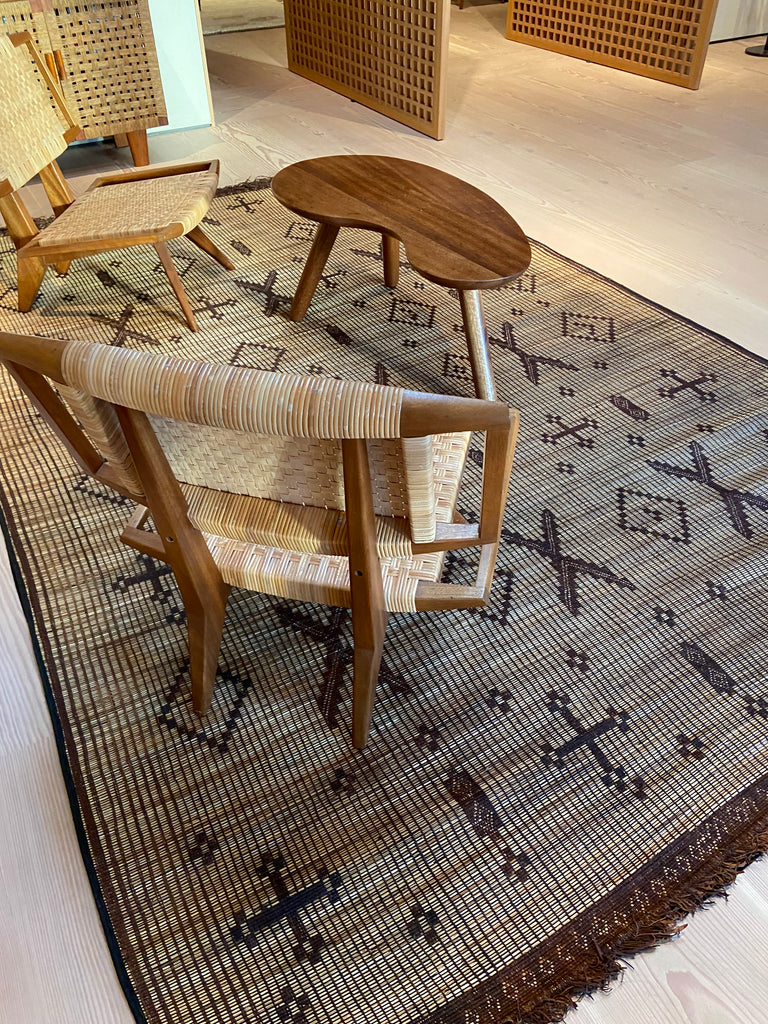

Introduction
Across the vast, shimmering expanse of the Sahara, among dunes and whispering winds, the self-styled “Free Men” of the desert have moved, lived, and woven their lives into enduring cultural expressions. One such expression is the humble yet deeply meaningful rug and mat of the Tuareg—an item that carries within it the spirit of desert travel, survival, artistry and identity. Although the Tuareg are better known for their indigo robes and camel-caravans, the mats and rugs they weave reflect their lives as nomads, offering a sensory connection to their shifting camps and sun-bleached horizon. This article explores how the Tuareg tribes crafted, used and imbued meaning into their rugs / mats, how the nomadic lifestyle shaped their materials, techniques and symbolism, and why these pieces resonate today in interior décor and cultural heritage.
Who are the Tuareg – Nomads of the Sahara
The Tuareg are a Berber-speaking people, traditionally semi- or fully-nomadic pastoralists who inhabit a broad swath of the Sahara and Sahel—ranging from Moroccan Sahara to Libya through Niger and Mali into Burkina Faso. Their self-designation often communicates freedom: they refer to themselves as “Kel Tamasheq” (those who speak Tamasheq) among other names. Their desert identity is captured in the moniker “Blue Men of the Sahara,” owing to the indigo-dye turbans and robes that lightly stain their skin.
Nomadism defines the Tuareg way of life. Herding camels, goats or sheep, moving seasonally to water, and traversing great distances across sand and rock. \Their mobility meant that belongings had to be portable, durable and suited to life on the move. It is in this context that weaving and mats assume a potent functional and cultural role.
The Rug / Mat in Tuareg Life
While many pieces labelled “Tuareg rugs” in commercial markets are adaptations or modern reinterpretations, in traditional Tuareg culture mats—often made of reed, leather, sometimes goat or camel hide—played central roles. Sources describe “hand-woven by the nomadic Tuareg tribes of Mauritania … made of reed palm and camel leather” as one style of mat. What emerges is a form of material culture that is both utilitarian and symbolic.
Materials & Techniques
-
Many of the mats are woven from palm or reed fibres, interlaced with leather strips from camel or goat.
-
Designed for durability in the harsh desert environment—sun-bleached, sand-blasted, often rolled or folded for transport.
-
Patterns often simple, geometric, or composed of woven leather bands rather than the high-pile knotted carpets familiar in other traditions.
-
Because the maker is a nomad, portability, ease of maintenance and suitability for camp life were as important as aesthetics.
Function & Symbolism
-
The mat underfoot in a desert camp becomes a marker of home, shelter, place. To sit, to pray, to share tea, to lie down: the woven mat is the thin margin of comfort in a harsh world.
-
Symbols and motifs reflect identity, clan affiliation, journeying, protection. According to one source on Berber carpets, “the shape that adorn the Berber carpet have meanings and connotations… in the past a means of communication between family members, especially between women.”
-
The artisanal skills involved held social significance. A settled crafts-caste within Tuareg society (the Inadan) was traditionally responsible for metal-work and leather-work, and some sources note their role in producing the handicrafts and camp accoutrements.
Nomadism, Space & Design: How the Desert Shaped the Rug
The dynamics of life in the Sahara—the winds, the sand, the scarcity of water, the need to move—are woven into the design and usage of the mats/rugs:
-
Simplicity of design: Without the luxury of large looms, intricate dye-work or deep piles, the mats remained straightforward, functional, yet elegant in their minimalism.
-
Materials suited to the environment: Palm and reed resist sun and sand, leather straps provide durability and grip.
-
Portable size and rollability: These mats could be rolled, tied, moved—matching the ever-moving camp of the Tuareg.
-
Color palette and visual cues: The desert’s subtle hues—beige, camel, leather-brown, muted black—appear in these mats, integrating the craft with the natural landscape.
-
Social and cultural movement: The caravans that the Tuareg ran, transporting salt, gold and goods across vast distances, meant that art needed to travel. Every item had to be suited to movement.
The Rug as Living Story: Culture, Identity and Symbolism
Beyond practical use, the mats of the Tuareg carry deeper meanings:
-
The very fact of weaving and possessing a mat signified participation in Tuareg cultural patterns—mobility, self-reliance, desert knowledge.
-
Women’s weaving held symbolic power: the mat they wove would enter the new camp, become part of domestic life, anchor that family unit in movement.
-
Patterns could convey lineage, status, or simply the maker’s skill. The unique imperfection of each item is part of its authenticity: “no two sets of Tuareg mats are ever exactly the same.”
-
The transition from nomadism to semi-sedentary life in recent times has given these mats a heritage value: they speak of a way of life that is under pressure, shifting under modernity, desertification and political borders.
From Desert Camp to Design Statement
In the 21st-century interior design world, the mats of the Tuareg have found a new audience. Designers and collectors reference their raw materials, authentic textures and archetypal “nomadic chic” appeal. Commercial sources present “vintage Tuareg mats” as items with heritage and wander-lust appeal.
It is important, however, to differentiate between items genuinely woven by Tuareg craftsmen in desert conditions and those created for export with adapted techniques. The authenticity, materials, and provenance matter—especially given that what begins as functional nomad gear becomes decorative luxury.
Why the Tuareg Rug Matters for Modern Interiors & Conscious Design
-
Tactile connection to place: A mat woven of palm and leather invites you to feel the Sahara beneath your feet, to inhabit the spirit of movement and open space.
-
Minimalism with meaning: These rugs strip away ornate flourishes, favour robustness and subtle beauty. In our cluttered modern interiors, they bring calm and authenticity.
-
Sustainability and craft: Made from natural, local materials; crafted by hand; shaped by environment. They align with growing consumer interest in ethical, meaningful design.
-
Narrative power: Owning a Tuareg-style rug invites a conversation about culture, nomadism, adaptation. It becomes more than décor—it becomes story.
-
Contrast and context: In a modern European or North-American living room, a Tuareg mat introduces desert textures, leather highlights and natural hues, creating an arresting focal point.
Preserving the Legacy — Care, Respect and Ethical Considerations
As interest rises in such rugs, ethical questions come into play: Where were they made? Under what conditions? Are the makers fairly compensated? Does the sale support the craftspeople, or simply exoticise their culture?
For collectors and interior buyers:
-
Ask about materials: is it palm-reed + leather straps as traditional, or wool + dyes re-imagined?
-
Check provenance: Was the mat made recently, or decades ago in a genuine nomadic camp?
-
Consider care: These items may require special cleaning, since materials differ from typical wool carpets.
-
Recognise cultural context: Weight the value of owning a piece of living culture—and treat it with respect.
Conclusion
The rugs and mats of the Tuareg reflect a fascinating intersection of nomadic lifestyle, artful simplicity, desert environment and cultural identity. From the wind-blown Sahara camps to modern interiors thousands of miles away, the woven reed and leather mat carries a legacy of freedom, movement, adaptation and beauty. For anyone drawn to meaningful décor, a Tuareg piece is not just rug—it is a passage, a story, a horizon rolled into fibre and leather.
By honouring the materials, the makers and the cultural context, we don’t just own a mat—we invite into our space a fragment of Sahara light, the echo of camel hooves, and the whisper of a desert people who wove their lives into every stitch.
Share this
Explore more
Popular posts


